
1965 Lincoln Penny: Date Value vs Grade Value
What is the 1965 penny value? Do you believe that a coin from the mid-1960s must carry a premium simply because it is old? Is that applicable to the 1965 Lincoln cent?
This penny had already been in circulation for more than half a century by 1965. But the year itself was not unusual. To understand if the 1965 cent is ordinary or valuable, you need to separate two ideas: date value and grade value. The difference between them explains most price myths.
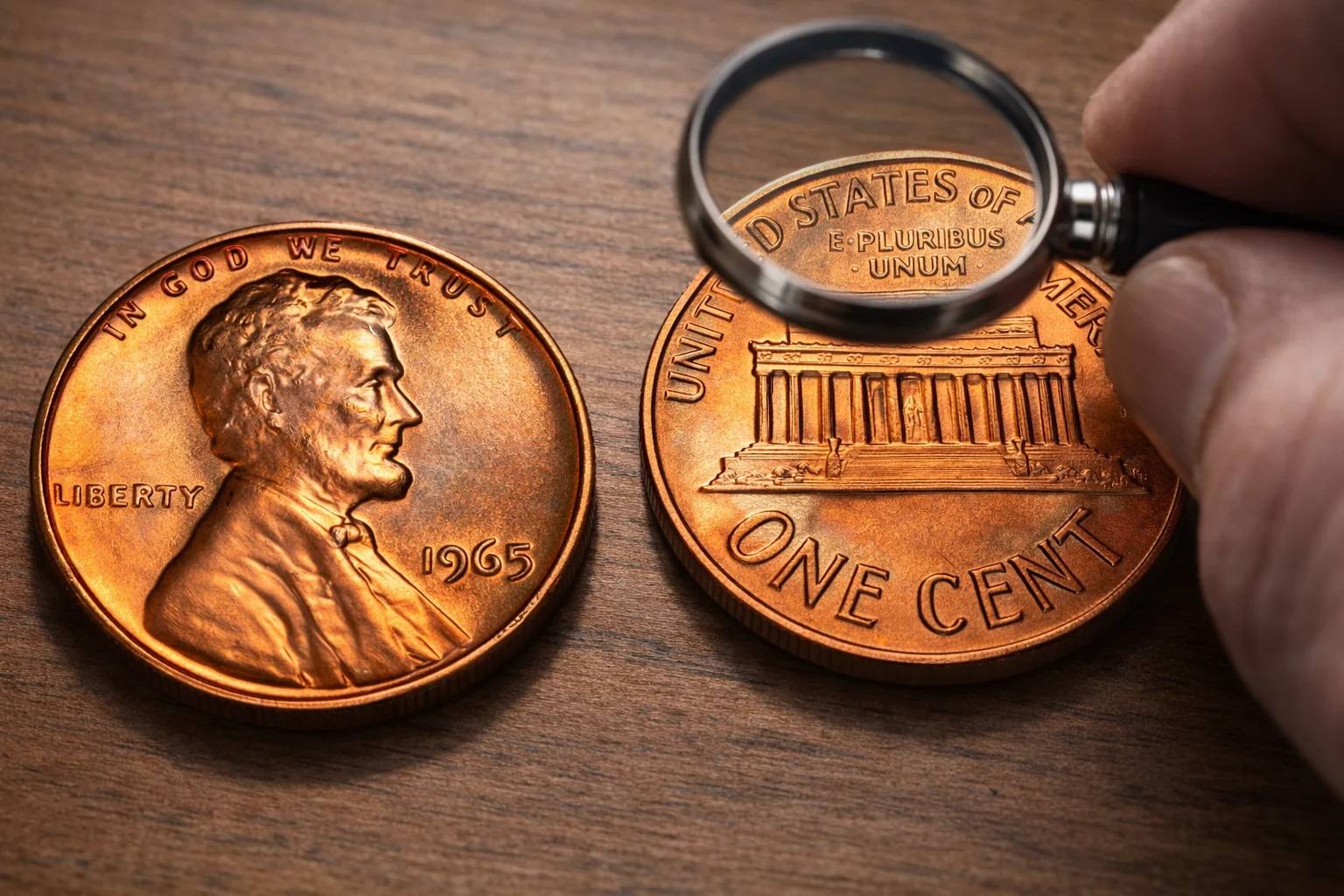
Basic Specifications of the 1965 Lincoln Penny
Before judging the price, confirm the core characteristics.
Feature | Detail |
Year | 1965 |
Mint mark | None (no mint marks used in 1965) |
Obverse | Abraham Lincoln |
Reverse | Lincoln Memorial |
Composition | 95% copper, 5% tin & zinc |
Weight | 3.11 grams |
Diameter | 19.05 mm |
Edge | Plain |
All 1965 cents were struck without mint marks. This was a Mint policy decision (from 1965 through 1967). The absence of a mint mark is normal, and this detail does not signal rarity.
Composition remained copper alloy without silver. The metal content also does not create a built-in premium above face value.
Correct identification prevents most pricing mistakes. Many coins are misread because of wear or poor lighting. So, firstly, confirm the year, the lack of a mint mark, and the weight with the size. To judge them precisely and correctly, use the coin scanner app. In case of any questions, you can ask the built-in AI assistant and save notes to the digital collection.
Only then move to value.
Understanding Date Value: Does 1965 Alone Matter?
Date value means a value based solely on the year. This concept applies to low-mintage issues or key dates. It does not strongly apply to 1965.
Production in 1965 exceeded one billion pieces. The purpose was circulation, not collectibility. The Mint removed mint marks to discourage hoarding during a period of coin shortages. The decision increased uniformity, not scarcity.
Large output explains why so many examples survive today. The year is not rare, not a key issue. It does not sit in a special historical category.
Because of this, 1965 has limited date-driven value. Age alone does not move the price. Market interest focuses elsewhere.
What Really Determines Price
Year matters less than condition.
Many people search for lists of coins worth money and expect 1965 to appear because of its age. That expectation often ignores grade. Condition controls the premium.
Value forms through a combination of:
Surface preservation
Luster retention
Sharpness of detail
Color quality
Market demand
A worn 1965 cent remains common. A well-preserved piece enters a different category. The same date behaves differently depending on grade.
Circulated vs Mint State: A Practical Comparison
Most 1965 pennies circulated for decades. They passed through daily transactions. Wear follows clear patterns.
Check these areas:
Lincoln’s cheek
Jawline
Hair above the ear
Coat folds
Memorial columns and steps
Circulation wear creates smooth, even flattening. High points lose detail first, and texture fades.
Weak strike is different. Weak strike shows flat detail but normal metal texture. Post-mint damage shows scratches, dents, or irregular marks.
Confusing these differences leads to overpricing.
Uncirculated coins look different. They retain original mint luster. Surfaces reflect light evenly. High points remain sharp. Even small contact marks matter in higher grades.
A side-by-side comparison shows the gap clearly:
Feature | Circulated | Mint State |
Surface | Dull, smooth | Bright, textured |
Detail | Soft | Sharp |
Luster | Absent | Present |
Market demand | Low | Higher |
This is where grade value begins to outweigh date value.
Copper Color Grades: BN, RB, RD
Copper reacts to air. Over time, it darkens. Collectors classify uncirculated copper cents by color.
Brown (BN): Full brown tone. The original red has faded. Lowest premium within Mint State grades.
Red Brown (RB): Mixed red and brown surfaces. Partial original color remains. Moderate premium.
Red (RD): Strong original red color. Highest premium in upper grades.
Color matters most in Mint State levels. An MS65 BN may sell for modest amounts. An MS65 RD may trade for several times more.
Original surfaces carry more weight than visual brightness. Remember that and never clean the coin. Cleaning lowers market interest. It strips away original surface tone and alters texture. The result often looks harsh or unnatural. Experienced buyers notice these signs quickly.
Practical Price Overview (without Error Examples)
In the table below, you can see prices that reflect general market ranges for standard examples. Error pieces and minting flaws are not included in the table.
Grade | Typical Range |
Circulated | Face value |
AU | $1–$2 |
MS60–63 BN | $3–$8 |
MS64–65 BN | $10–$20 |
MS65 RD | $30–$70 |
MS66 RD | Market dependent |
Circulated pieces rarely exceed face value. Slightly better preserved coins may bring a modest premium. The largest jumps appear in higher Mint State grades.
The difference between MS65 and MS66 can be significant. Surface quality becomes critical, and small contact marks can reduce the price sharply at that level.
Thus, the outcome is clear: date does not explain this gap, grade does.
Mint Errors of 1965 Cent: Do They Add to the Value?
From 1965 to 1967, the Mint removed mint marks from circulating coins. As a result, every regular 1965 cent comes without a letter. That detail alone is not an error. Real premiums come from striking mistakes.
Below are the most recognized varieties for this year:
Error Type | What to Look For | Typical Market Range* |
Dramatic Off-Center / Misaligned Dies | Design shifted noticeably toward one side | $30–$75+ |
Double Struck | Second strike visible, overlapping design | $100–$400+ |
Doubled Die Obverse (DDO) | Clear doubling in date or lettering | $150–$600+ |
Clipped Planchet | Missing the curved portion of the coin’s edge | $40–$120+ |
“L” in LIBERTY on Rim | Letter pushed into the edge area | $20–$80+ |
Motto Misalignment (“WE TRUST” on rim) | Part of the inscription shifted toward the edge | $30–$100+ |
*Prices depend on the strength of the error, grade, and demand.
Off-center strikes are the most frequently encountered major mistake for this year. Small shifts carry modest premiums. Large, dramatic examples bring stronger interest.
Double strikes show two impressions. Severe overlap creates the highest appeal.
True doubled dies display distinct, separated outlines in letters or numbers. Light machine doubling does not qualify.
Clipped planchets result from a cutting error before striking. The missing section should show proper metal flow along the edge.
Edge lettering issues, such as the “L” in LIBERTY touching or crossing into the rim area, attract attention when clearly visible.
High-grade examples, especially MS66 and above, also draw interest even without errors.
Surface damage, dents, or post-mint alterations are not errors. A clear production origin is required before assigning a premium.
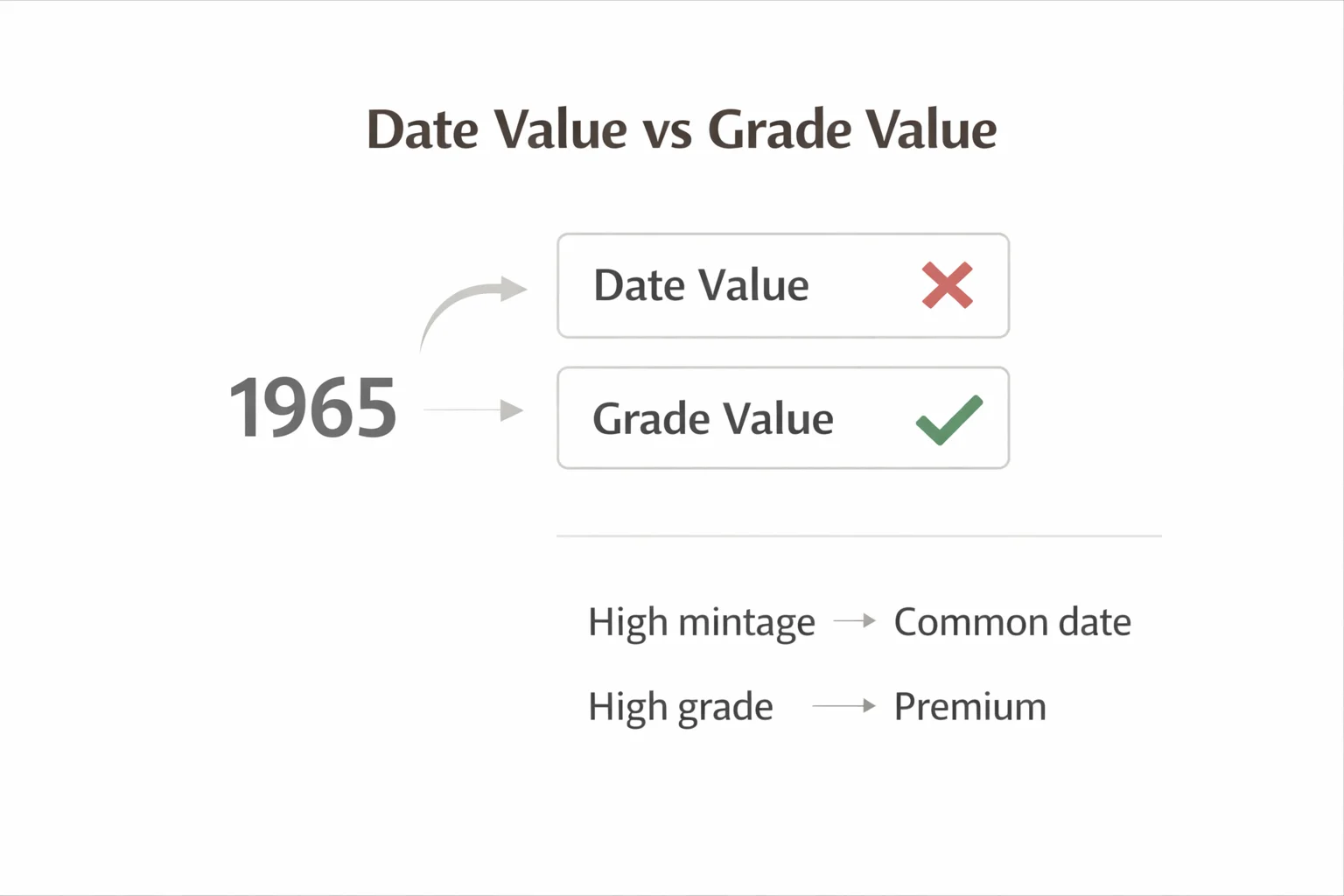
Date Value vs Grade Value: The Core Difference
Date value asks: Is the year rare? Grade value asks: How well did the coin survive?
For 1965, the answer is clear. The date value is limited, as production was high. So, the coin is common in circulated condition.
Grade value drives the premium. High Mint State examples, especially red pieces, command attention. Strong errors can exceed standard prices.
Many older cents are assumed to be worth money simply because of age. Market behavior shows otherwise. Supply and preservation control demand. So, remember these nuances to avoid confusion surrounding the 1965 cent.